Heroes and Happy Endings
By Glen C. Strathy
I decided that this month I would talk about something different... heroes and happy endings. Partly this is because the marketing voice that usually gets suppressed by the part of me that would rather just ramble on about things I find more interesting has been nagging me that I ought to choose a topic at least distantly related to my books.
(I write books sometimes. Did I mention?)
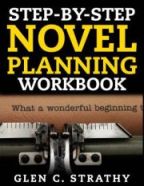
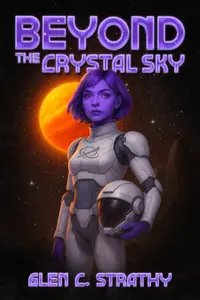
Something I've seen debated a lot in genre fandom culture in recent years has been the nature of heroes, since we live in an age where many heroes have become less... heroic. This has relevance to both the current YA SF series I've been working on and my middle-grade novel. Just to satisfy that marketing voice, I'll even give you clickable cover images of them...
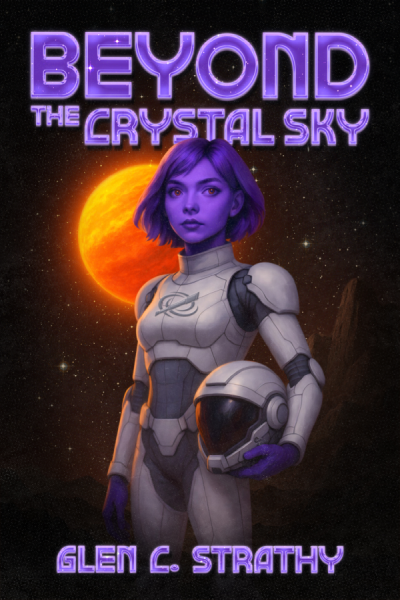 |
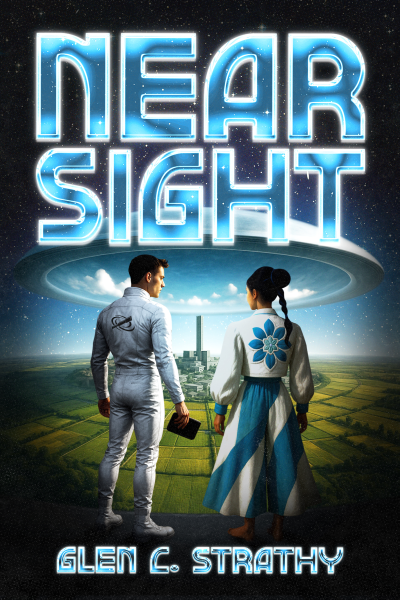 |
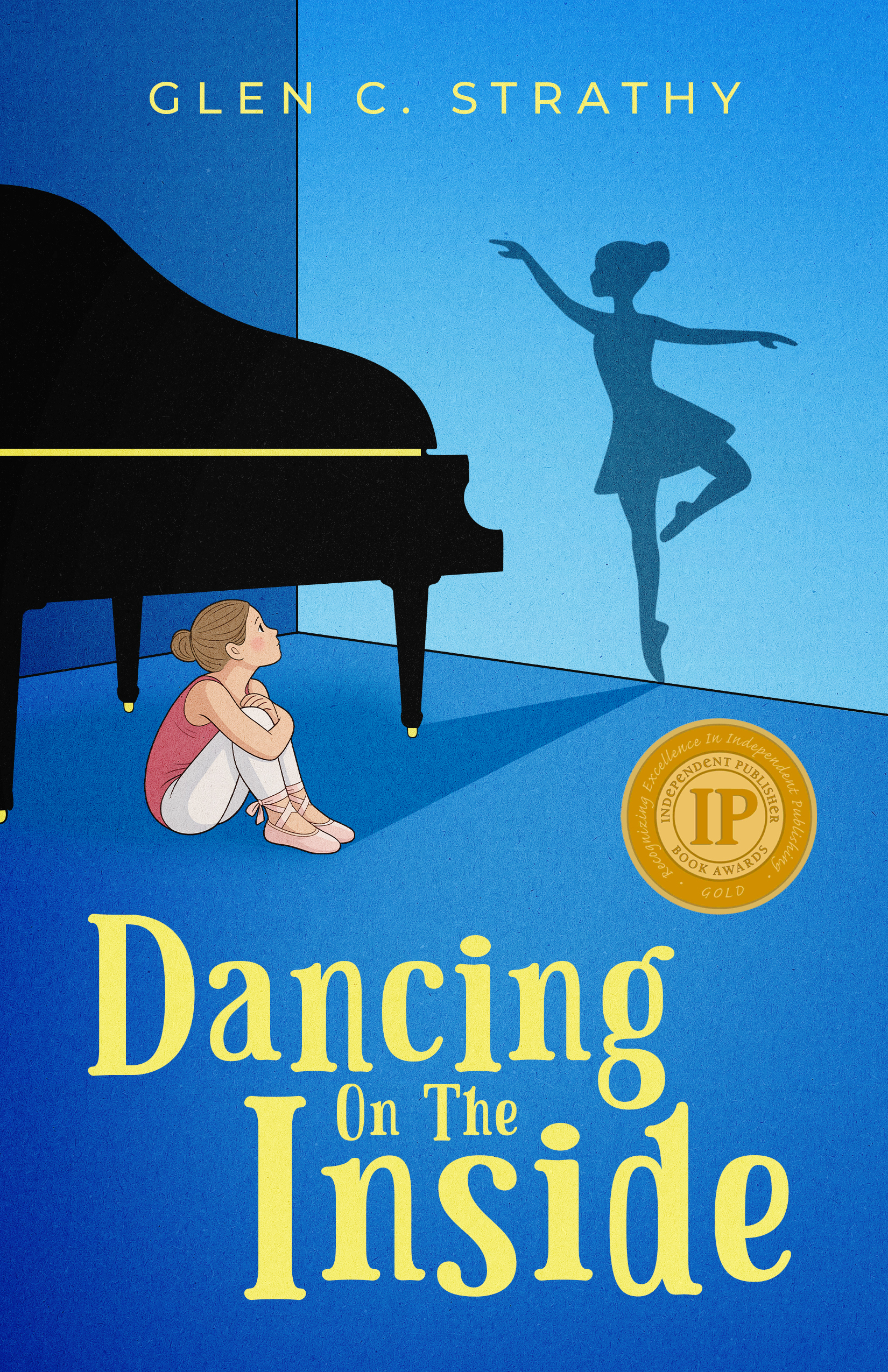 |
Now that that's out of the way...
Rather than do a review of the academic literature on the topic, I think I'll just write about my own observations for a few minutes, beginning with a question...
Why do stories for young people usually feature heroes and happy endings?
Many of the stories I have written feature classic heroes. Female heroes, to be sure. But they all overcome challenges and get happy endings... well on the page at any rate. This is very common in books written for children and teens, and I confess to being distinctly drawn to writing this type of story.
Why?
In my case, the answer is that when I was young I found such books fun to read, and I'm hoping others will find them fun.
The other reason is that young people are looking forward to their future as adults. And it's important that they do so with hope, not just for themselves but for their family, their community, and the world. We want the next generation to make the world better, or at least good.
Life can be pretty challenging. Teens know this. Even though they may not have shouldered adult burdens, they are experiencing new challenges. And they need to rise to those challenges. Not everyone succeeds. Not everyone fulfills their goals and dreams. But the odds are better if a young person approaches life with some measure of optimism, courage, and enthusiasm.
So most people I think feel that young people need characters they can look up to and aspire to emulate. They need heroes who are admirable, even if they have little in common with the reader. Reading about such characters gives young people role models. It gives them a guide to facing their own challenges.
Values are also important. When we are young, we want heroes who make moral and ethical decisions, who are good people, because that's what most people aspire to be. When good people win, it creates hope. It inspires us to become better and embrace similar values.
Why was tragedy once considered the highest form of storytelling?
The situation is a little different for adults.
As much as it is important for young people to believe in themselves, it is important for mature people to have a sense of humility.
The ancient Greeks held tragedy to be the highest form of art because tragedy is humbling. Tragedy shows what happens when adults in the prime of their lives start to think they can get away with anything, when they let their sense of self-importance become arrogance.
Tragedy shows what happens when we ignore our limitations, when we think we are so great we can ignore morality and restraint, when we think we are better, more privileged than everyone else. When we think our ambitions are more important than our humanity.
Tragedies were often written about leaders and kings, who had the power to cause great harm to the community if they became too full of themselves and made bad decisions. But the lesson of humility is important for everyone.
Stories reflect society's changing view of itself.
It's also true that the types of heroes we enjoy says something about the society we live in. For example. the great age of adventure writing was probably the 19th century, when the British Empire was at it's peak, settlers in the US, Australia, and Canada were taming the wilderness, and European explorers were still discovering parts of the world far from home.
And yes, they were doing a lot of harm to indigenous people at the same time. But that's something Western culture only learned to acknowledge more recently.
Young societies, like young people, crave heroes and adventure -- challenges to overcome and rewards to be won. Optimistic stories about heroes speak to people's anticipation that their civilization is on a path to a bright future.
Mature societies, like mature people, place more value on learning humility and owning up to their mistakes, on being wary of ambition.
Heroes and Cynicism
A third category of hero is the Byronic hero -- the jaded hero, the cynical outsider, the hero who has had his hopes dashed by society or been betrayed by his allies, but still clings to his sense of morality and still tries to do good.
This is the type of character you will run across in hard-boiled detective stories, Westerns, or thrillers. It is the character who doesn't trust the system and its leaders anymore (and for good reason), and may still get betrayed from time to time. It is perhaps a character best suited to late stage civilization, a civilization whose values have become a sham.
The Byronic hero is different from the optimistic (though sometimes naive) hero and the tragic hero. The Byronic hero has been humbled by experience, but still thinks he's superior. He's no longer innocent, but still has a sense of morality. He can be inspired to protect the innocent.
These heroes are popular because they speak to people's sense that their community has become corrupt and no longer serves them. There's little in real life that the average person can do to reform their world, but the Byronic hero is someone who can sometimes achieve small victories, and for that is inspiring.
(Click here for more on Byronic heroes.)
Deconstructed Heroes
I confess, what I find disheartening about some recent stories in popular culture is that they reject or try to deconstruct the idea of heroes altogether.
In many movies and TV shows today aimed at young people, heroes often behave as villains, in that they are self-centred and selfish, to the point of seeming narcissistic. They commit immoral, unethical, or illegal acts, but are nonetheless presented in the story as the "good guys."
Meanwhile, many villains are portrayed as so sympathetic that their crimes are almost entirely excused by the story.
The world these stories take place in seems to be one in which there are no heroes or villains. None of them are ever held accountable for their choices. You don't look up to a hero. The most you can do is identify with them. You are supposed to like them, not because they are a good person, but just because the writer seems to like them.
While some would argue that the characters in these stories are more realistic, my feeling is that they make the stories demoralizing. You don't leave the theatre or close the book feeling inspired by what you watched. You don't feel that the story affirms any positive values or conveys any meaningful message. So while these stories are often presented to young people, they don't do much to inspire young people.
At least, that's how it looks to me and why I'm probably not going to write stories with deconstructed heroes.
But don't let that stop you, if you are interested in such characters.
- Home
- Glen's Ramblings
- Heroes and happy endings
Related articles you may enjoy...
Writing a Mary Sue
The problems and challenges with writing a Mary Sue character. When is it okay and when is it not?
How to Create a Character
Tips on how to create a character who is believable, memorable, functional, and 3-dimensional.
How to Write a Byronic Hero
How and When to write a Byronic Hero: the traits and uses of this popular character type.
Search this site...
|
||
| site search by freefind |
100% Human Generated Content!
All
articles on this website were written by a human being -- one possessed of flaws and limitations, but also with a personal perspective and a desire to help fellow
writers. No article on this site was written by or with the aid of artificial intelligence (AI).
Popular Articles



Mini-Course
Never be stuck for a great story idea again! This online mini-course will show you how to create simple ideas for original characters and build a plot around each character that contains the essential elements needed for a compelling story.
Recent Postings


-
Reverse Unicorns: AI and Writing
Reverse unicorns and the use of AI in fiction writing -
Is AI Getting Better at Writing?
The cases of Jerry Falade, Sephera Giron, and whether AI is getting better at writing -
Heroes and Happy Endings
 A brief note on why young people need stories with heroes and happy endings
"I've read more than fifty books on writing, writing novels, etc., but your website has the most useful and practical guidance. Now that I understand how a novel is structured, I will rewrite mine, confident that it will be a more interesting novel." - Lloyd Edwards
"Thanks to your "Create a Plot Outline in 8 Easy Steps," I was able to take a story that I simply just fooled around with and went willy nilly all over, into a clearly defined, intriguing battle where two characters fight to keep their relationship intact, and try to find a balance in control of themselves and their lives. Thanks to you, I'm not ashamed of the poor organization of my writing." - Nommanic Ragus
"I am so glad I found your site. It has helped me in so many ways, and has given me more confidence about myself and my work. Thank you for making this valuable resource, for me and my fellow writers. Perhaps you'll hear about me someday...I'll owe it to you." - Ruth, Milton, U.S.A.
"I never knew what to do with all the characters in my head, but since discovering Dramatica I am writing again in my spare time. Thank you for making this available. Yes, it is a bit complex, and it does take time, but I love it because it works." - Colin Shoeman
"I came across your website by chance. It is a plethora of
knowledge, written in a simplistic way to help aspiring writers. I
truly appreciate all of the information you have provided to help me
successfully (relative term) write my novel. Thank you very much!" - Leo T. Rollins
"I
can honestly say that this is the first website that is really helpful.
You manage to answer complex questions in relatively short articles and
with really intelligent answers. Thank you for taking the time to write
these articles and sharing them so generously." - Chrystelle Nash
"...had no idea that a simple click would give me such a wealth of valuable information. The site not only offered extremely clear and helpful instructions but was a very enjoyable read as well. The education from your wonderful site has made me a better writer and your words have inspired me to get back to work on my novel. I wish to give you a heartfelt thanks for How to Write a Book Now, sir." -- Mike Chiero